
PIPS 4 Profit and narrow orchard systems researcher roadshow
Did you manage to get to one of the six researcher roadshow events across Australia’s apple and pear growing regions?
Over 220 growers, industry providers and researchers engaged in a smorgasbord of collaborative R&D information during the PIPS 4 Profit and narrow orchard systems (NOS) researcher roadshow in August and September. Ninety per cent of attendees scored the roadshow 10/10 for ‘worthwhile attending’, and 77 per cent of growers expressed that the new knowledge gained will influence system or management decisions in their orchards within the next two years.
A strong feature of both nationwide R&D programs is local relevance. PIPS 4 Profit has 27 trial and demonstration sites established across the regions; 22 of these are in commercial orchards. While local growers and researchers become intimate with what is happening in their backyard, the roadshow provides an opportunity to learn more about transferable R&D being carried out in other growing regions, with researchers travelling to each event to personally discuss their work, locally. Attendees welcomed the regionally specific handouts provided – strictly a slide-free zone with the emphasis on in-orchard discussion.
The PIPS 4 Profit program encompasses four projects for apples and pears: Pest and disease management (AP22001), Pear production systems for future climates (AP22002), Building sustainable soils (AP22003) and Optimising apple production systems (AP22004). These projects are led by the Tasmanian Institute of Agriculture (TIA) and Agriculture Victoria. The program’s regional and project partners are Lenswood Apples (SA), Pomewest and the Department of Primary Industries and Regional Development Western Australia (DPIRD WA), the New South Wales Department of Primary Industries and Regional Development (NSW DPIRD), SWAN Systems and APAL.
The Narrow orchard systems for future climates (AS22002) project is establishing research sites around the country to determine whether transitioning to narrower orchard systems could benefit pome and stone fruit growers.
The research teams of the PIPS 4 Profit program and NOS project would like to thank the many growers who hosted these events and those who are hosting R&D sites over the five-year duration of activities.
PIPS 4 Profit and NOS resources
To see what is happening in your neck of the woods, visit the PIPS 4 Profit interactive map on the program website at https://apal.org.au/programs/more-industry-programs/pips-4-profit-program/.
Regionally specific handouts were a feature across all the researcher roadshows, with a package provided to all attendees so they had an opportunity post-event to reflect upon what they saw and heard, and follow up with key contacts in their own time.
If you missed the roadshows, visit the PIPS 4 Profit resources webpage at https://apal.org.au/programs/more-industry-programs/pips-4-profit-program/pips-4-profit-resources/ to access the handouts for each region, along with videos featuring many of the R&D host growers.
Find out more about the Narrow orchards for future climates (AS22002) project here: www.hin.com.au/current-initiatives/narrow-orchard-systems-for-future-climates.
South Australia
South Australia kick-started the researcher roadshow on 6 August when three Adelaide Hills sites were visited by attendees.
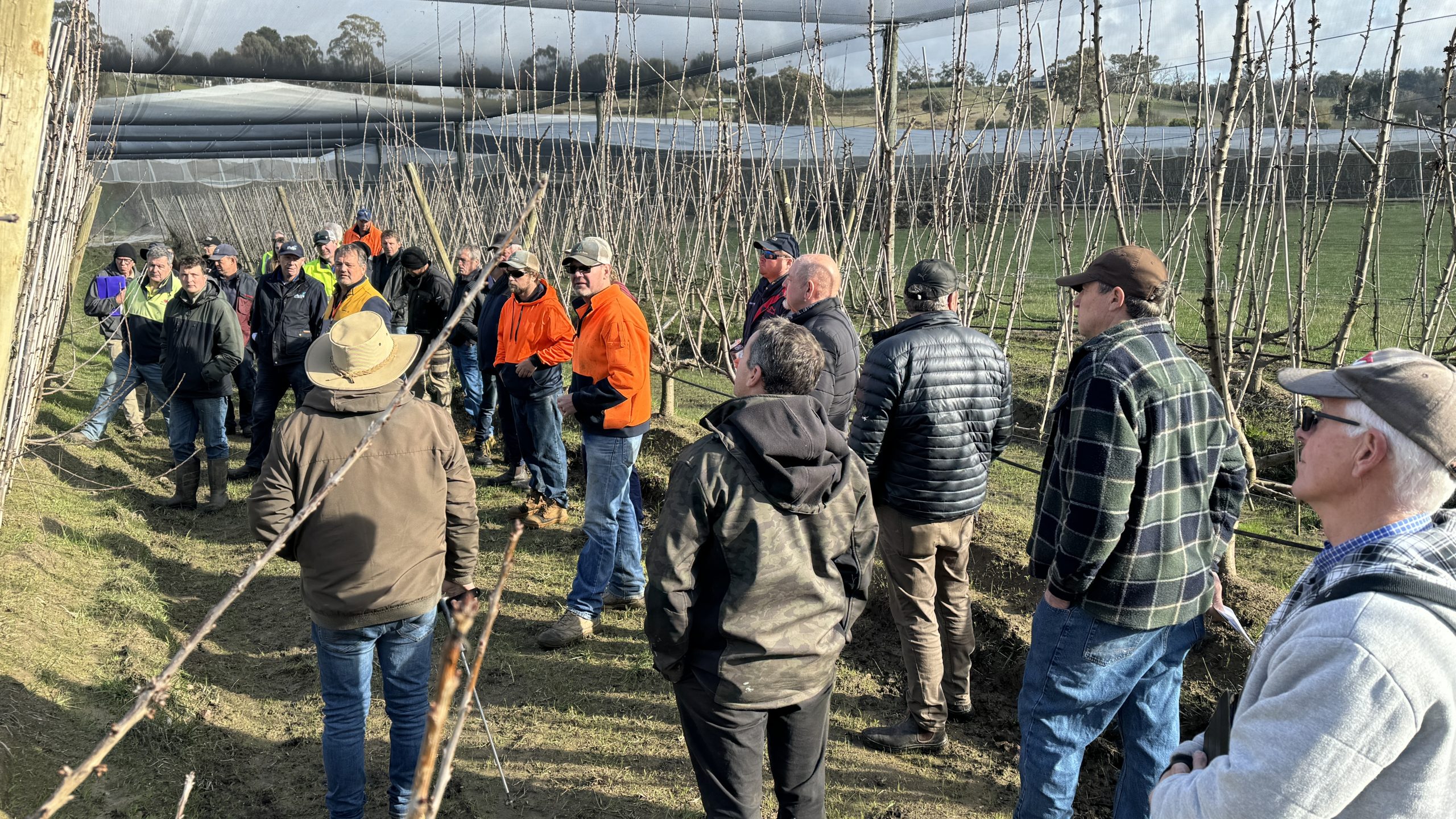
Adelaide Hills attendees at Matt Flavell’s soil health demonstration site where Building sustainable soils project leader Nigel Swarts (Tasmanian Institute of Agriculture) provided an update on the outcomes of PIPS3 and an introduction to the broader national project in the fourth iteration. Travis Brunnbauer (Lenswood Apples) is managing the SA site.
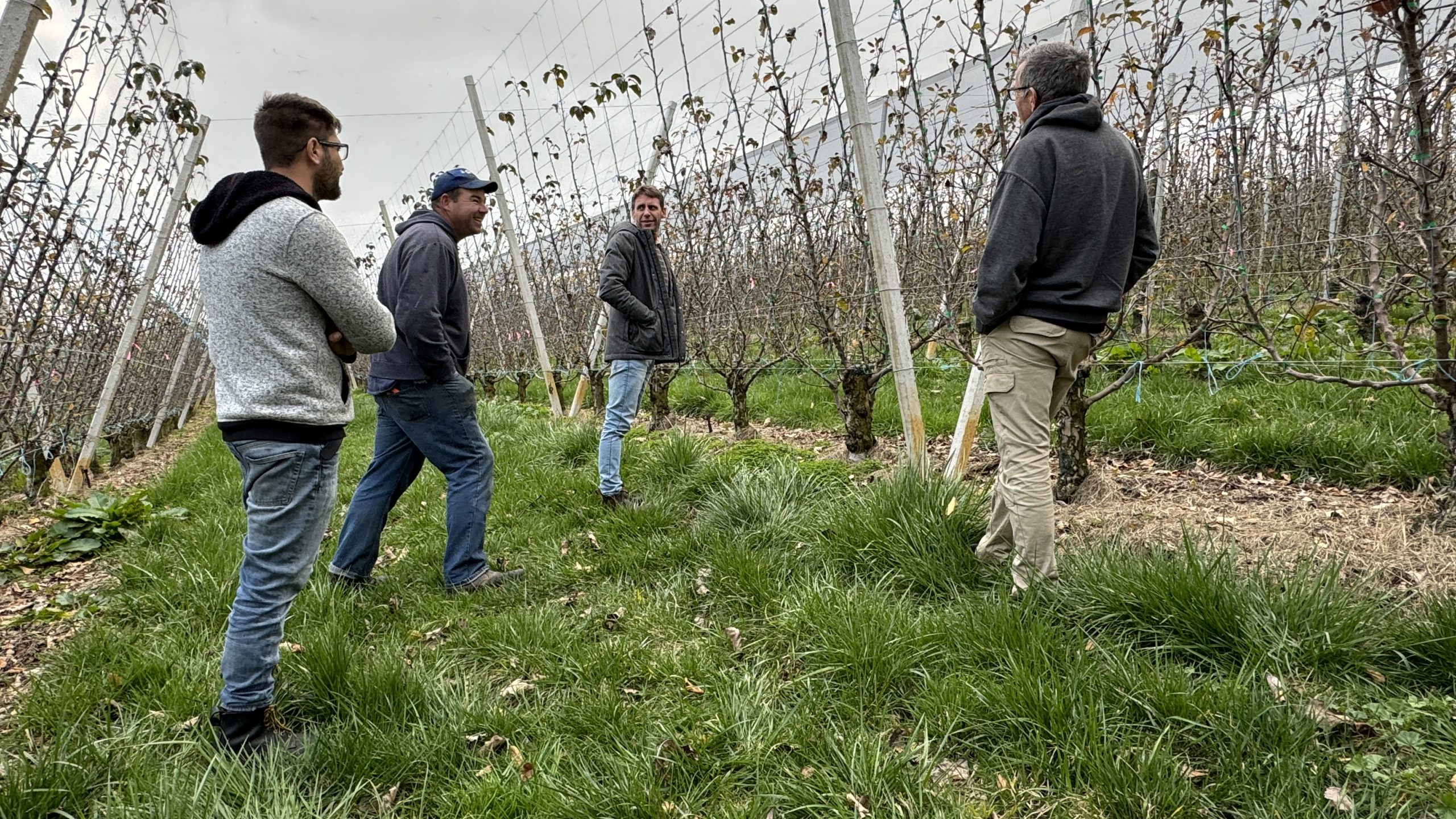
Travis Brunnbauer (Lenswood Apples), Noel Mason (AG & HC Mason, Forest Range), Nigel Swarts (TIA) and Ian Goodwin (Agriculture Victoria) met up the day prior to the SA roadshow event to learn from one another about orchard conversion techniques and system designs.
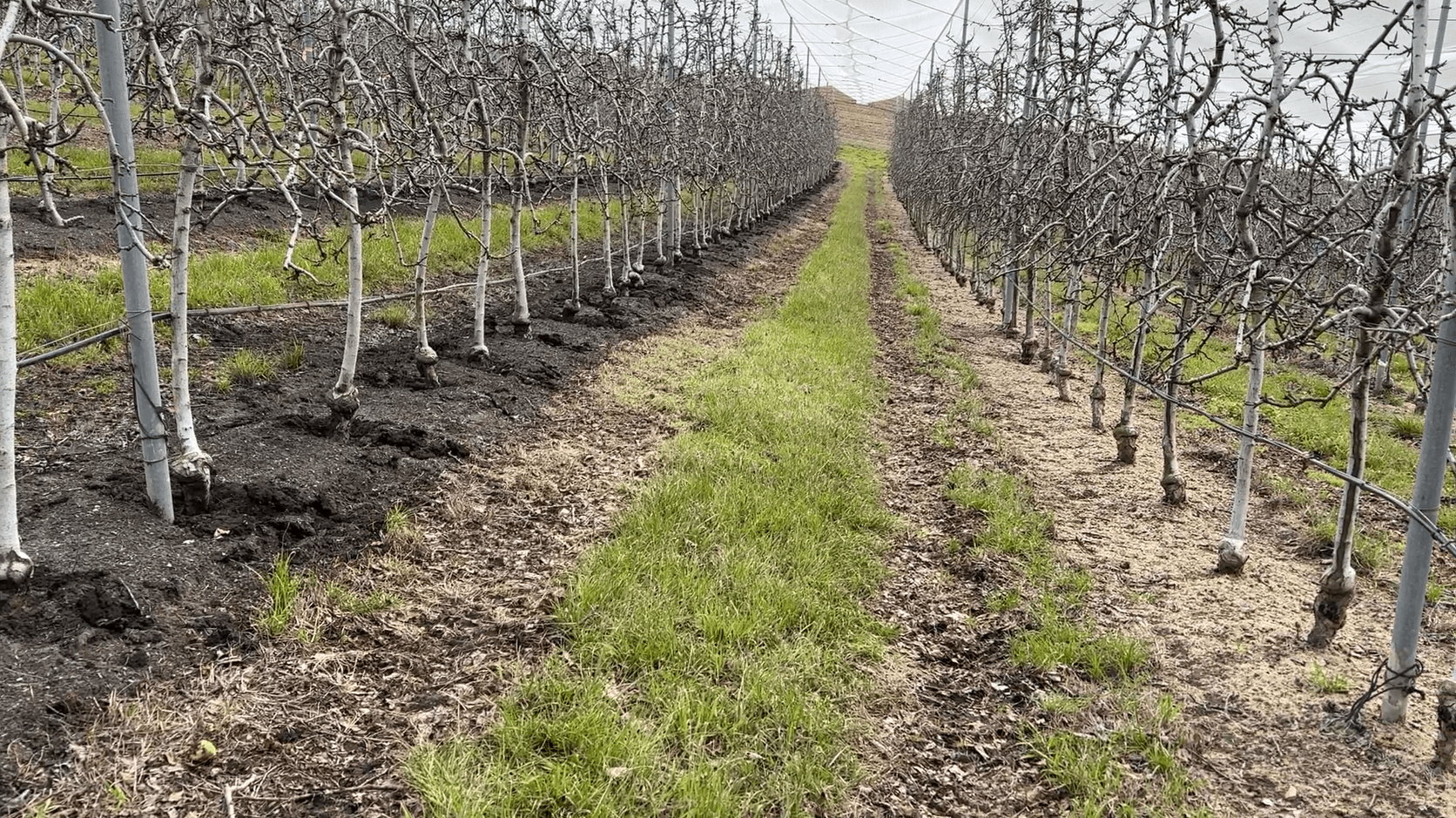
The Building sustainable soils project is undertaking long-term soil health, tree health and fruit quality measurements to determine the impact of tree line floor treatments. Forest Range grower Matt Flavell is hosting the demonstration site where the PIPS3 site assessment will continue, alongside new treatments of Jeffries Organic Mulch and a hydroseeded grass mix of fescues and clovers. Matt is keen to see whether the use of hydroseeding is cost effective, and an economic study will be undertaken to determine this.
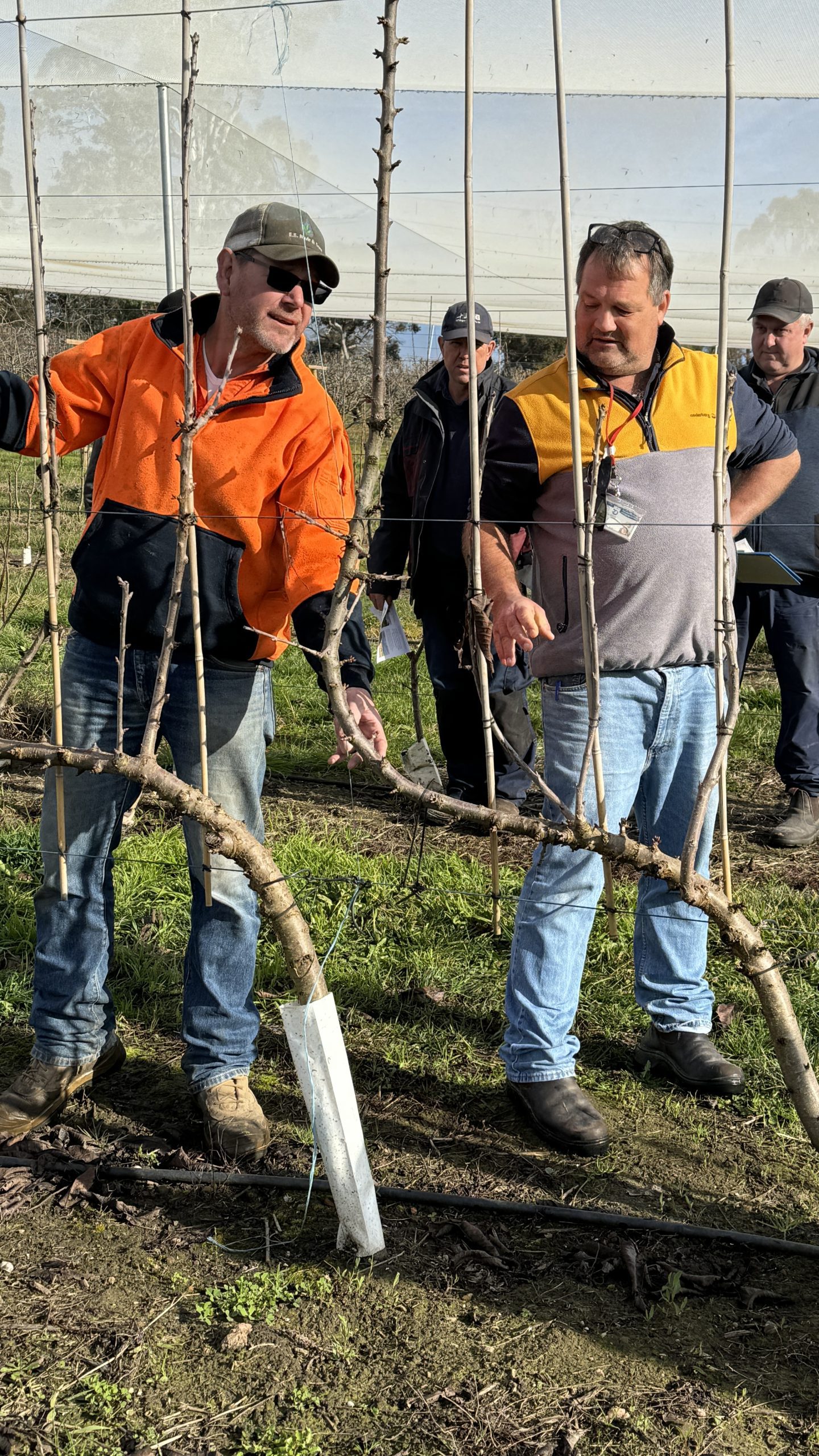
South Australian Research and Development Institute’s Darren Graetz and Lobethal grower Andy Flavell explained the NOS demonstration site underway, demonstrating the response of new cherry varieties to narrow orchard training systems.
Victoria
Agriculture Victoria’s Tatura SmartFarm hosted the Victorian researcher roadshow on 21 August.
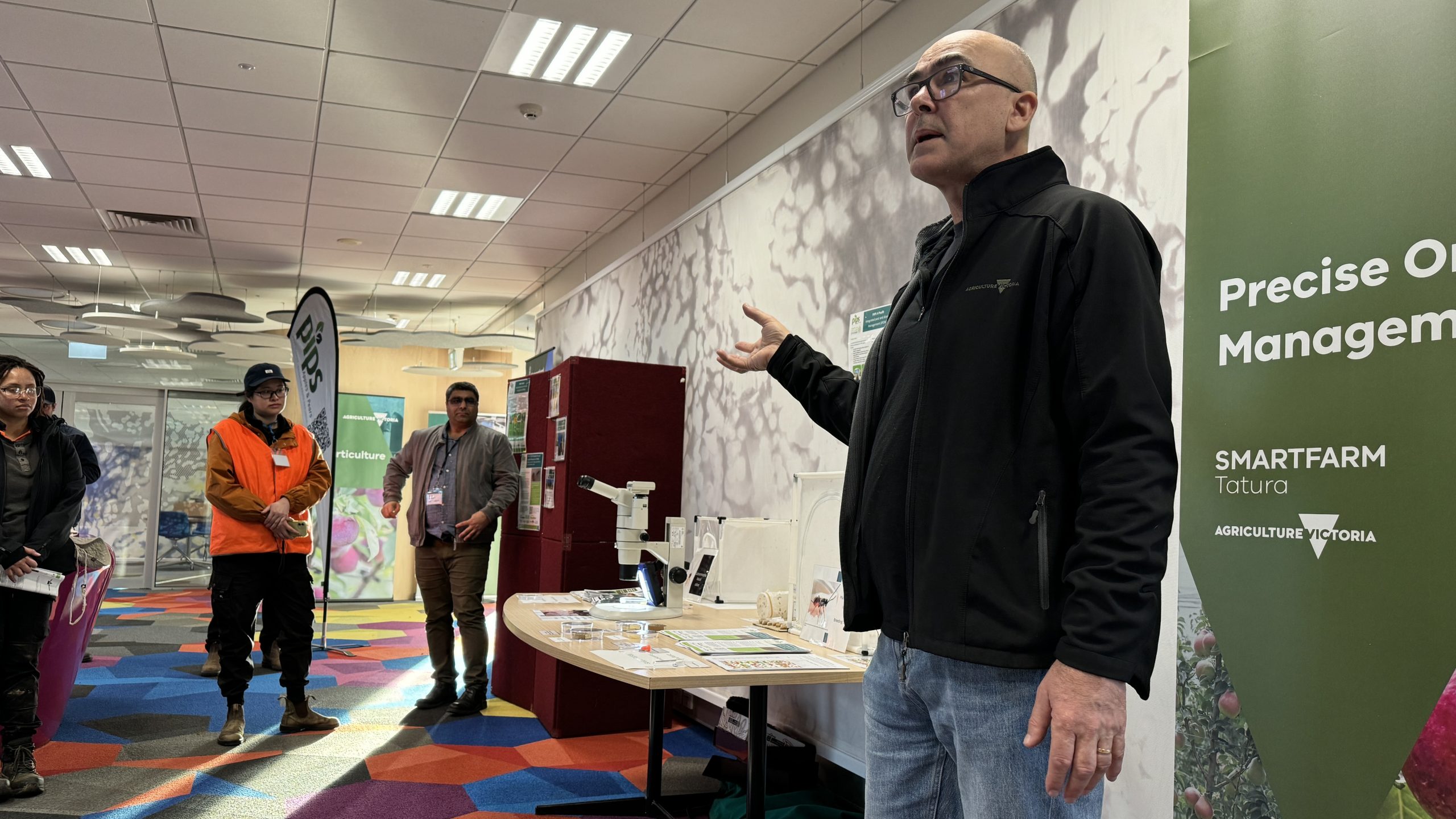
PIPS 4 Profit Pest and disease management project leader Greg Lefoe (Agriculture Victoria) chats to attendees about the activities of that project and the Mastrus ridens rearing – a biological control agent for codling moth – underway at the SmartFarm’s laboratory facilities.

Agriculture Victoria’s Ian Goodwin, Maddy Peavey and Alessio Scalisi demonstrated labour efficiency technologies they are using and evaluating economically in the PIPS 4 Profit program and NOS project on the SmartFarm’s Sundial Orchard. Several agtech companies were also on hand to show their products to attendees.
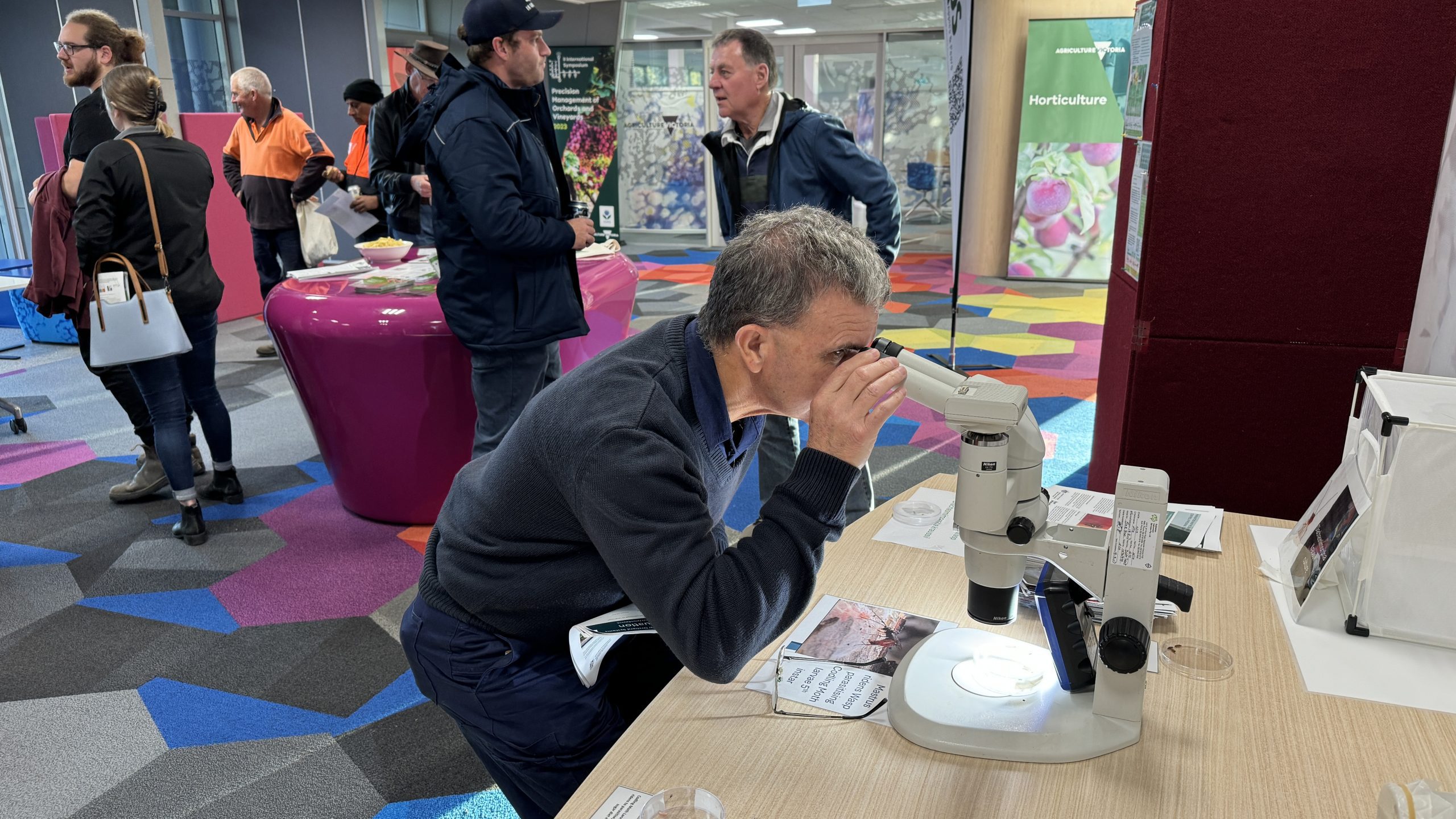
The hands-on Pest and disease management display at the SmartFarm.
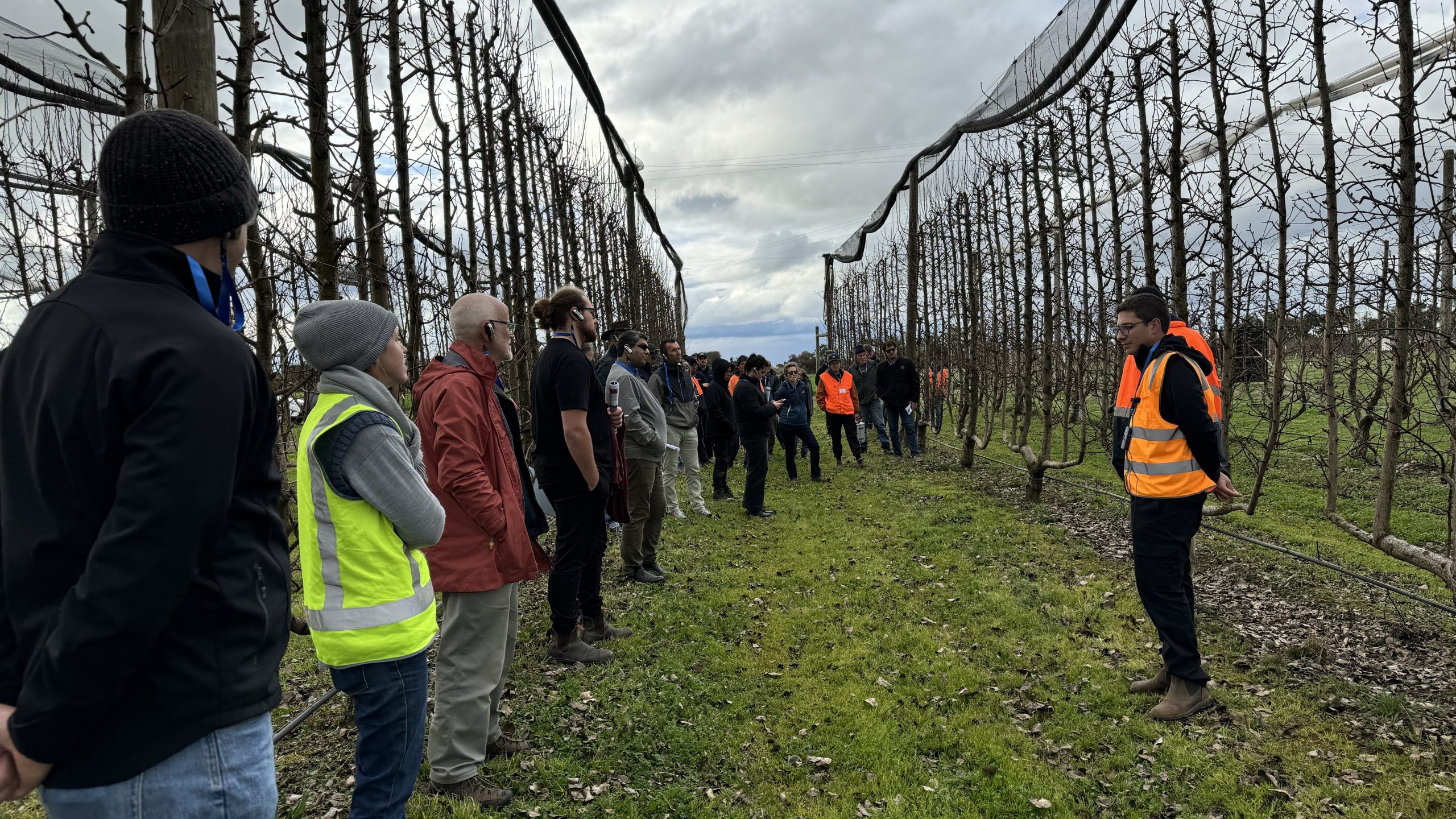
Agriculture Victoria’s Tatura SmartFarm has hosted pear rootstock, 2-D and trellis system trials for the past nine years as part of the PIPS program. Ian Goodwin and Alessio Scalisi provided a summary of the PIPS 3 program outcomes to attendees.
Western Australia
Roadshow events were held in Manjimup on 28 August and Donnybrook on 29 August.
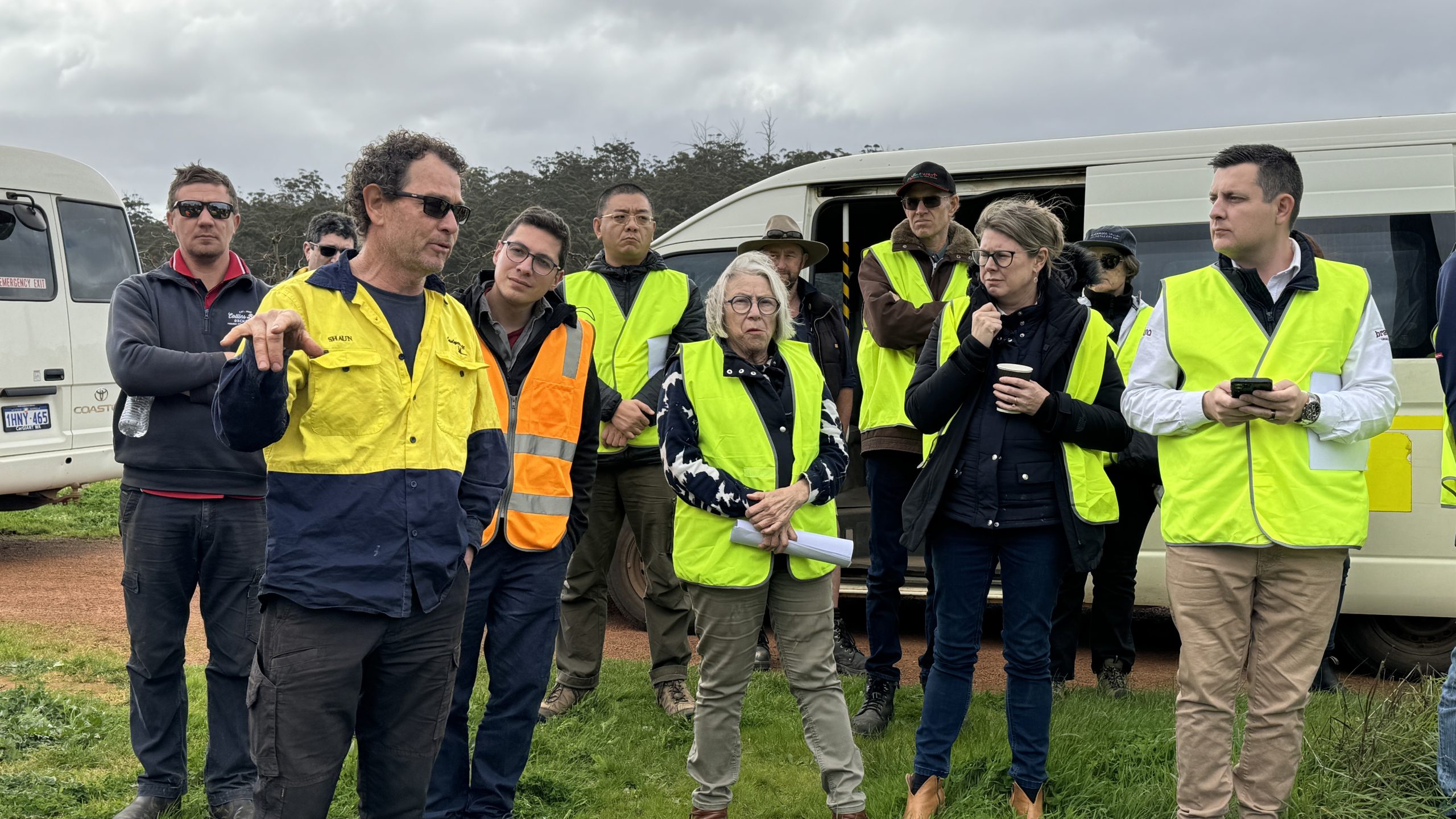
Bec and Shaun Whittaker hosted the Manjimup roadshow at Ladycroft Orchards. Shaun provided an overview to the group on his experiences with managing the inter row and tree line treatments of the Building sustainable soils demonstration site on the property.

PIPS 4 Profit and NOS partners in WA: Jen Riseley (Pomewest), Dario Stefanelli (DPIRD WA) and Nardia Stacy (Pomewest).

Pomewest’s Susie Murphy White and host of the Donnybrook event John Hearman provided an overview of the property and business aims.
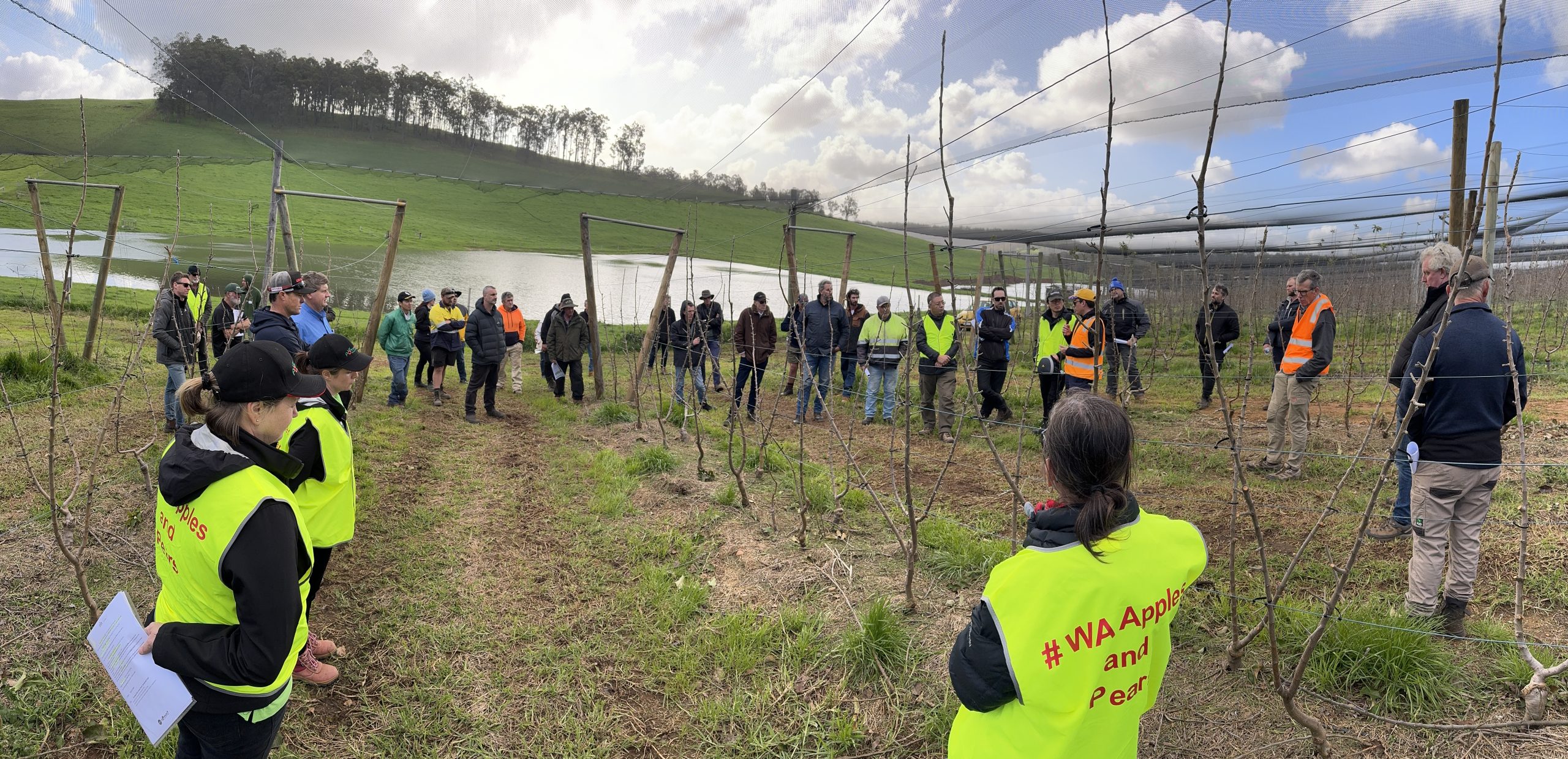
The orchard discussions were declared some of the ‘best ever’ experienced by growers and researchers. Attendees were impressed with Donnybrook roadshow host John Hearman’s willingness to try new systems and his use of budding to renovate orchards with underperforming apple and pear varieties.
Tasmania
The researcher roadshow was held across three orchards in the Huon Valley growing region on 11 September.

Matt Tack, Our Mates’ Farm, Geeveston (host of AP22004 thinning experiment for improved crop load) and Scott Price, R&R Smith, Rookwood (host of AP22003 soil health experiment) with Nigel Swarts (TIA).
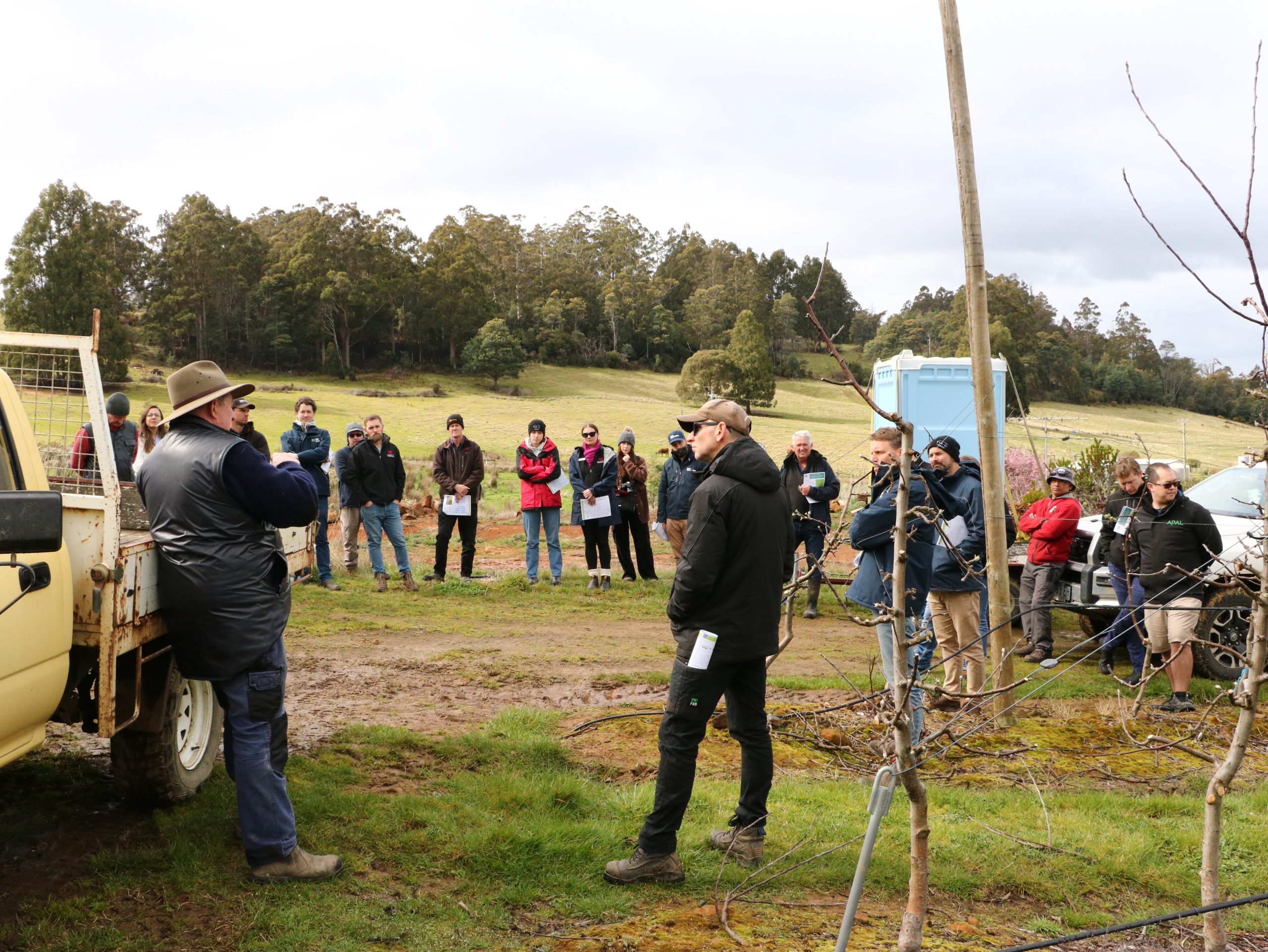
John Evans talks to roadshow attendees at his Geeveston orchard where he is hosting trials for the Optimising apple production systems and Pest and disease management projects.

Ramandeep Singh Sidhu (TIA) and Geeveston grower John Evans (host of AP22001 integrated pest and disease research) catch up in John’s orchard where the event commenced.
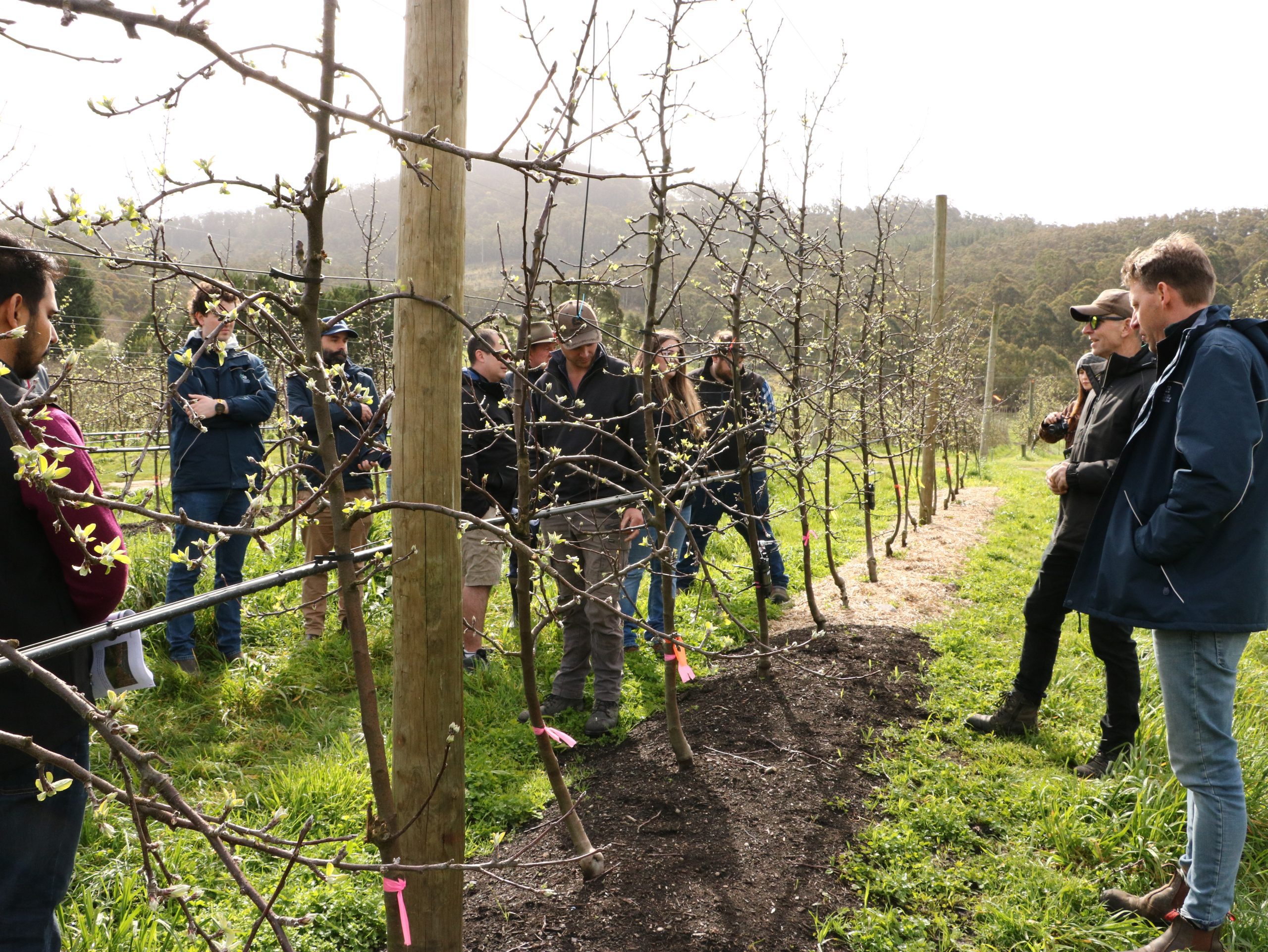
Attendees visit the Cripps Pink on M111 block at R&R Smith where a masters degree study conducted under PIPS3 will continue to evaluate the impact upon long-term soil health, tree health and fruit quality when the tree line is provided with additional organic amendments.
New South Wales
On 24 September it was the Batlow region’s turn.
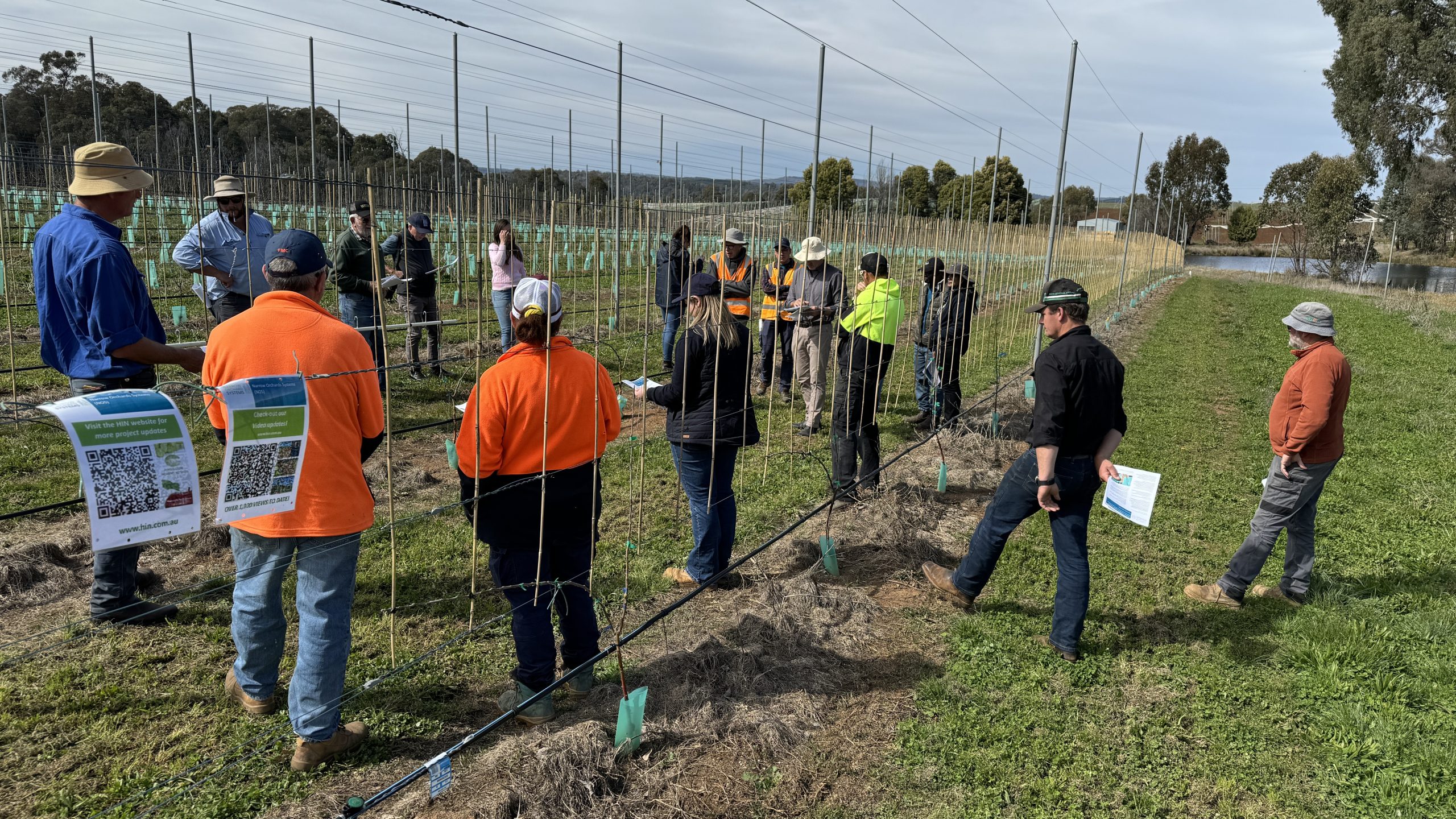
Attendees gathered in the NOS demonstration site at Tingira where Cosmic Crisp® on Nic® 29 rootstock has been planted at 3m x 2.4m (1,388 tress/ha) on planar cordon with 8 verticals at 30cm spacing (11,104 leaders/ha).
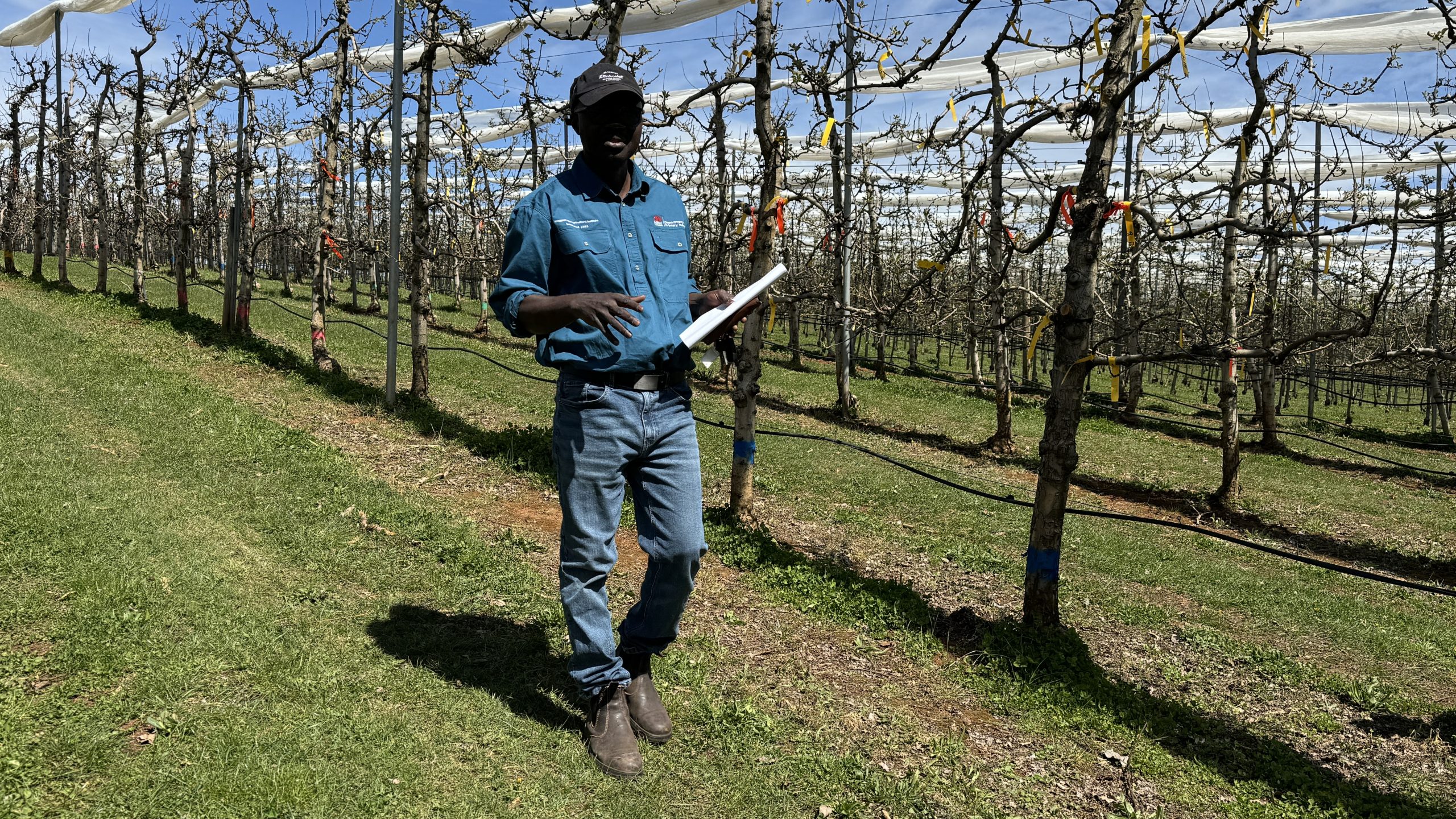
Michael Idowu (NSW DPIRD) presented in the Alvina Gala block, where he is conducting research into ways to improve tree sensitivity to chemical thinners by manipulating soluble carbohydrate supply to growing shoots and fruitlets through partial defoliation as part of the Optimising apple production systems project.
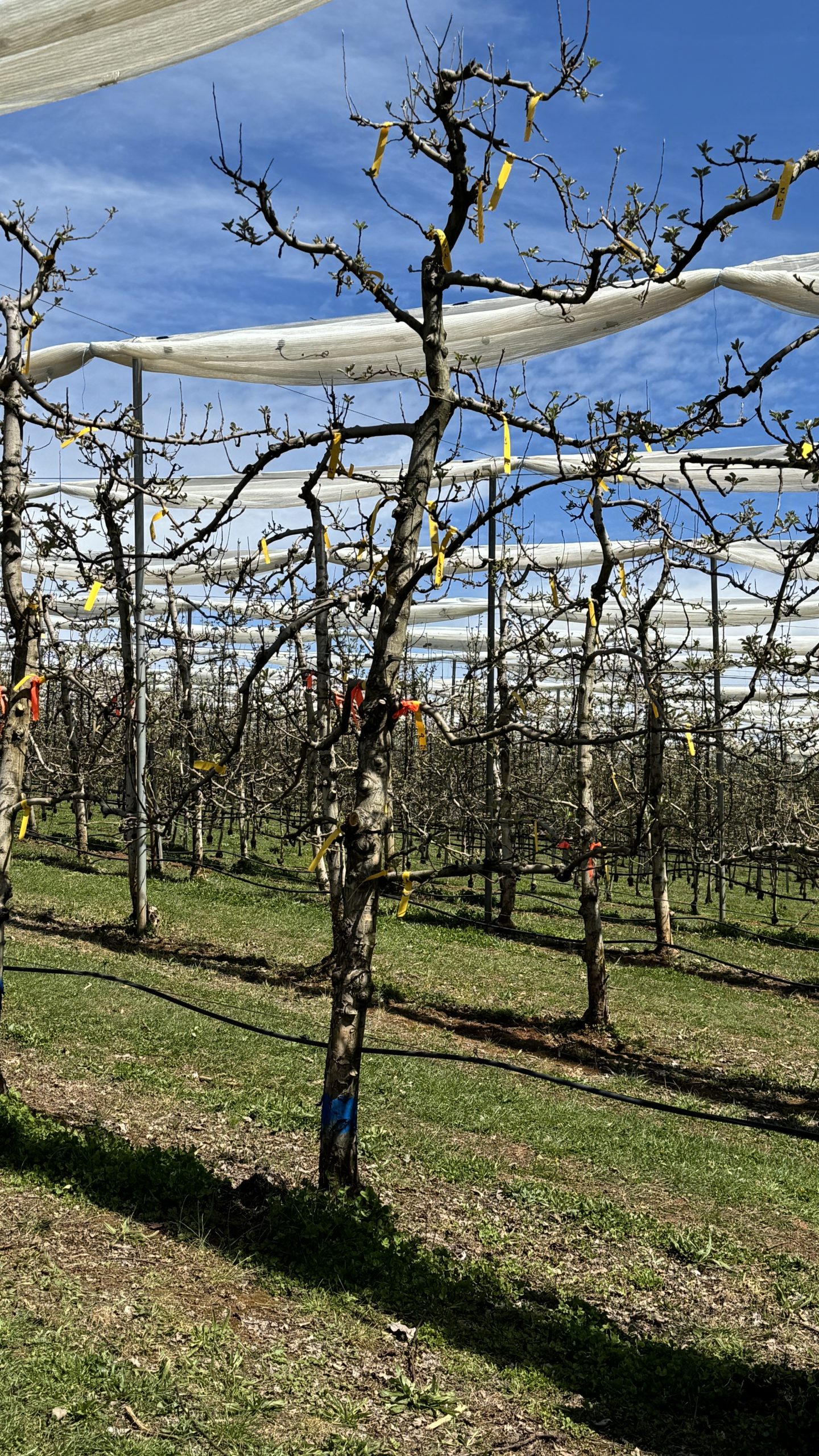
The Rosy Glow experiment site at Tingira, where ASE treatments are being implemented to determine more effective crop load management strategies using ASE under the Optimising apple production systems project.
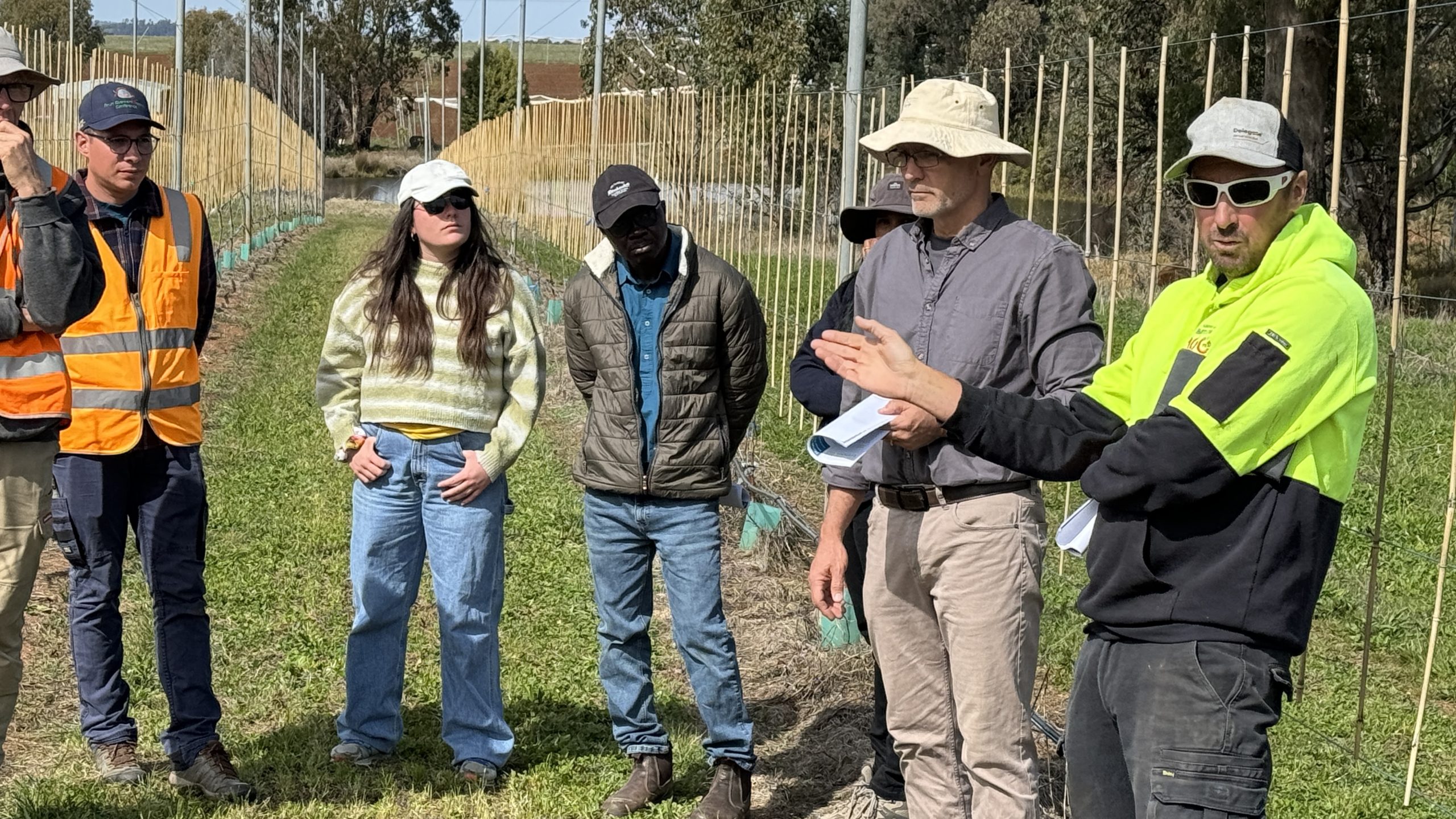
Host Jeremy Smart (Tingira) and Kevin Dodds (NSW DPRID) discussed the methods deployed recently to commence training the planar cordon system of the NOS demonstration site.
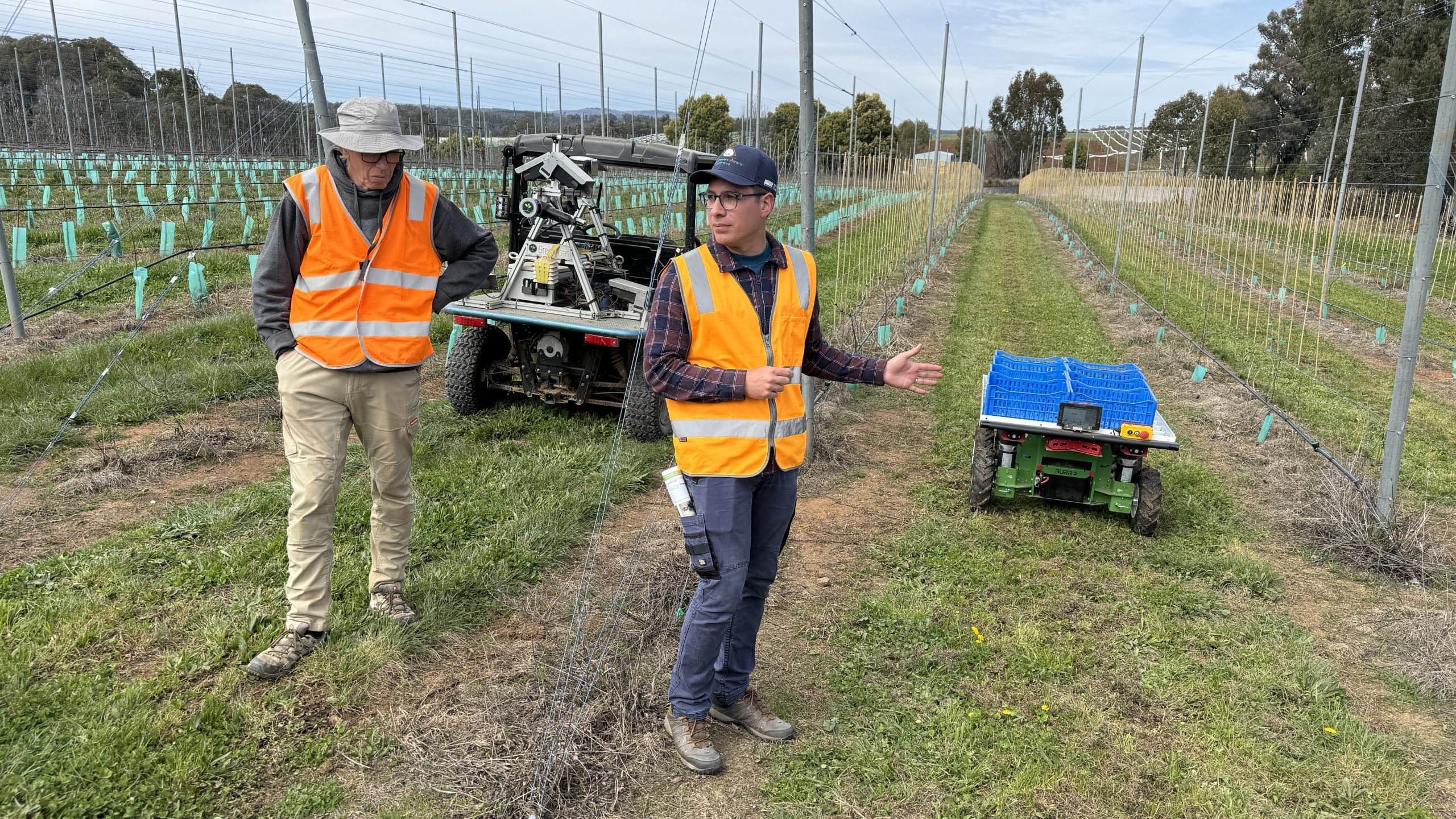
Agriculture Victoria’s Ian Goodwin and Alessio Scalisi demonstrated labour efficiency technologies they are using and evaluating economically in the PIPS 4 Profit program and NOS project. They demonstrated the autonomous Burro® platform (right) and the Green Atlas® Cartographer (left), which is used to efficiently scan the orchard for production and quality parameters to better inform spatial and seasonal management decisions.
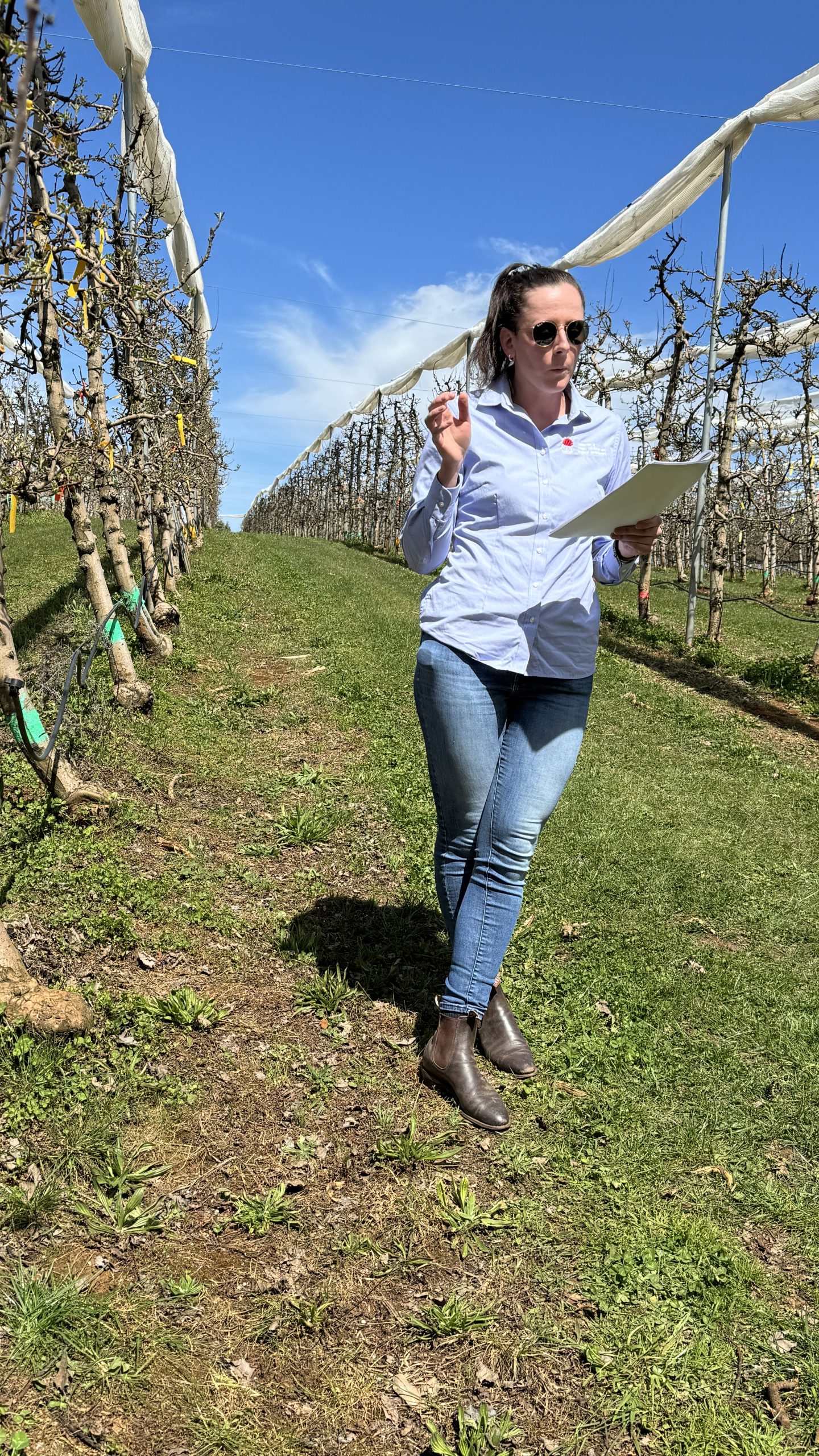
Jess Fearnley (NSW DPIRD) is undertaking a PhD with the Building sustainable soils project. Her experimental sites are in the Sydney Basin and Orange regions. She spoke at the Batlow event to explain how her research will help growers determine “How does improved soil health and carbon impact my trees and bottom line?”.
Acknowledgments
 The PIPS 4 Profit program has been funded by Hort Innovation, using the apple and pear research and development levy, contributions from the Australian Government and co-investment from Agriculture Victoria and the Tasmanian Institute of Agriculture. Hort Innovation is the grower-owned, not-for-profit research and development corporation for Australian Horticulture.
 The Narrow orchard systems for future climates (AS22002) project is funded through Frontiers developed by Hort Innovation, with co-investment from Agriculture Victoria, NSW Department of Primary Industries and Regional Development, South Australian Research and Development Institute, Department of Primary Industries and Regional Development WA, University of Queensland and Plant and Food Research New Zealand, and contributions from the Australian Government.
This article was first published in the Summer 2024 edition of AFG.



